


Visible housing
Wall / ceiling mounted
The same housing can mount on a wall or ceiling. Choose manual pull-down or electric operation, then check case width, mounting points and image drop.
Eligible products
Bundle and Save
When you add an item from 2 of the eligible categories
When you add an item from 3 of the eligible categories
When you add an item from 4 of the eligible categories
Big-screen moments. Everyday spaces.
Bring the picture down.
Get your room back.
Manual simplicity or motorized convenience. Find a screen that rolls away, with the right fit for your room and projector.

Start with your space
Choose where the screen will live, then how it moves. Manual screens operate by hand; electric screens use a motor and need power.
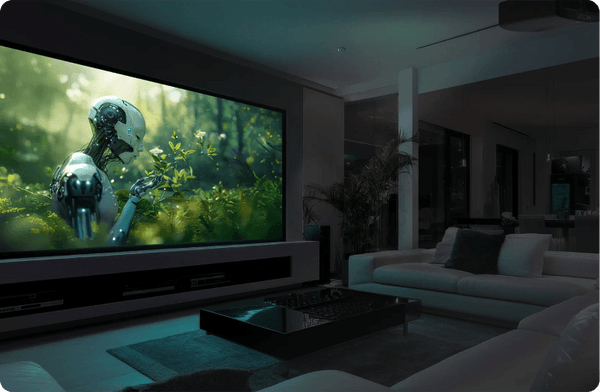
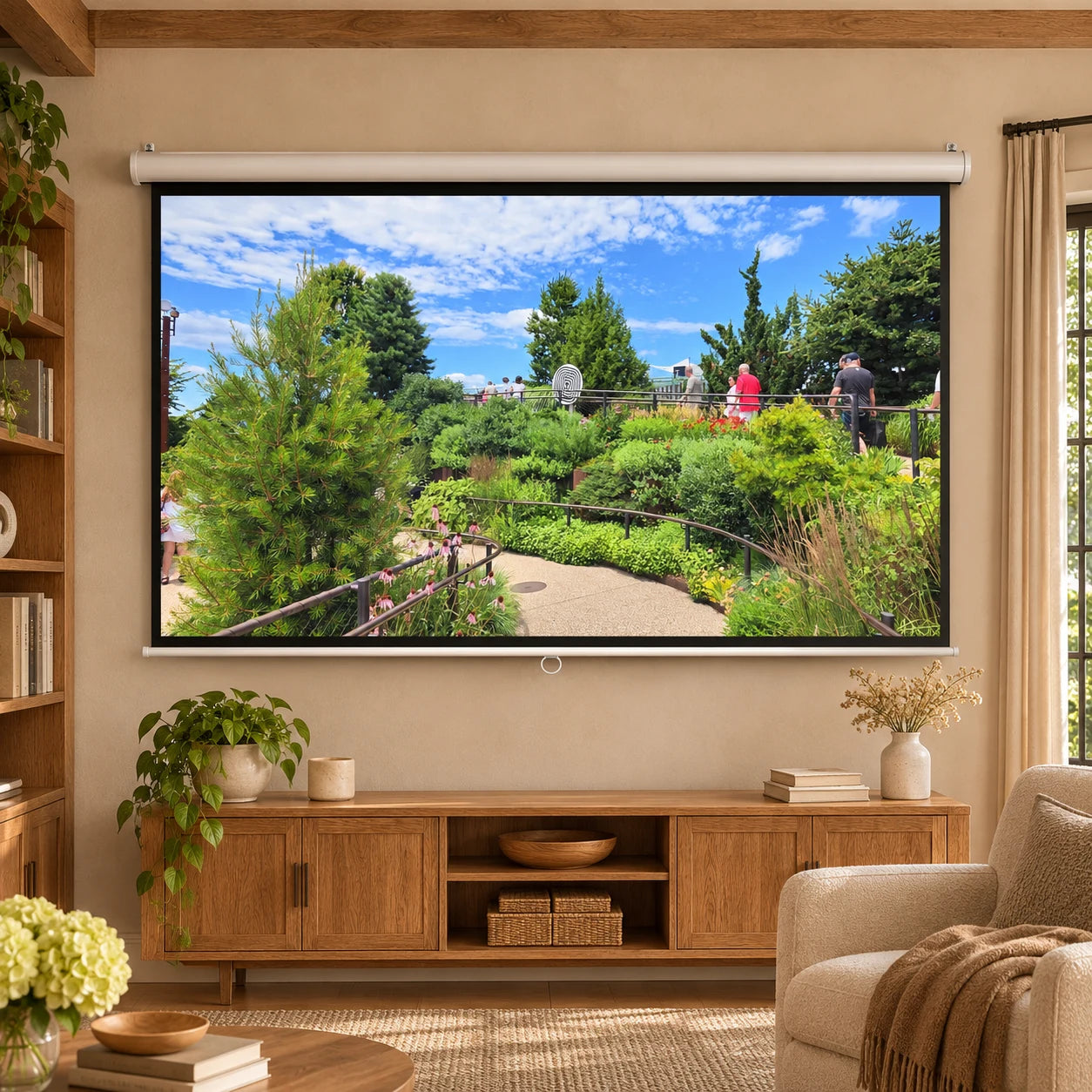
Visible housing
The same housing can mount on a wall or ceiling. Choose manual pull-down or electric operation, then check case width, mounting points and image drop.

Built into the room
Hide the case within the ceiling. Manual models need comfortable reach; electric models need power. Plan cavity space, support and service access.

From the ground up
Bring the picture up from a case below. Choose a manual pull-up or an electric lift, allowing room for the moving screen and projector placement.
Explore the full assortment with size, material and mounting filters.
Two checks you shouldn’t skip
A motor does not tell you whether a screen is tensioned—or which projector it works with.
Explore tensioned screens →Tab-tension systems use side tension to help keep the viewing surface flat. Both manual and electric examples exist. Compare the actual model, not just the operation type.
UST, short-throw and standard-throw setups have different requirements. ALR materials are not interchangeable; verify the intended throw type and viewing conditions before ordering.
A little planning goes a long way
Bring your projector model, room dimensions and preferred screen size. We’ll help you work through the screen, material and installation choices.
Talk to an expert · 888-392-4814Model and intended placement
Available width, height and mounting surface
Room light, seating and how often you watch
Choose manual when you can comfortably reach the pull mechanism and want simple operation without a motor or power connection. Choose motorized when the screen is high, used frequently, or needs to work with a remote or control system. Compare total installation requirements and daily use, not only purchase price. Confirm the controls included with the exact product.
Further reading: Screen buying guide
No. Retractable describes how the surface stores, not where the housing mounts. Designs include wall or ceiling cases, recessed ceiling units and floor-rising systems. First decide where the case can live and how the screen will travel. Then compare usable image height, housing dimensions and any furniture or architectural features in that path.
Further reading: Screen buying guide
Tab tensioning uses side tension to help maintain a flat deployed surface. It is particularly relevant when image geometry makes waves conspicuous, but it does not by itself establish UST compatibility. Compare tensioning and optical material as separate specifications. Follow the manufacturer’s setup and adjustment instructions rather than assuming any visible unevenness can be solved by tightening cables.
Further reading: Screen buying guide
Potentially, if the image and moving components clear the television and furniture. Measure the case location, screen drop and bottom-bar travel rather than only the final viewing position. Also check whether the screen will obstruct speakers, controls or ventilation. Plan how the room works both with the screen deployed and fully stored.
Further reading: Screen buying guide
Check that the selected housing and brackets support ceiling attachment, then calculate where the deployed image will sit using its image height and top drop. Surface mounting leaves the housing below the ceiling; recessing requires cavity space and service access. Confirm the structure, clearances and operating method before ordering. Ceiling mounting does not establish screen-material compatibility with a ceiling-mounted projector.
Further reading: Screen buying guide
Black drop is the non-image material above the viewing area on a retractable screen. It can let the image sit lower than the housing while preserving a dark border. Check the ordered drop and total deployed length against the room height and seating sightlines. A screen housing that fits the ceiling can still leave the picture too high, and the lower stop should only be adjusted as the manufacturer permits.
Further reading: Screen buying guide
Choose around how often the screen moves and how quickly it must be ready. A portable floor-rising or tripod design needs floor space, a stable base and a suitable transport case. A permanent wall or ceiling model needs a compatible attachment and a clear deployment path. Compare packed size, deployed image height and handling requirements as separate measurements rather than using image diagonal as a transport specification.
Further reading: Screen buying guide
Choose a mechanism and fabric intended for the projector geometry, follow the installation instructions and keep the deployment path clear. Tab tensioning can help maintain the surface shape, while an unsupported material may still show waves. Check the screen at its normal deployed position with the actual projector. Avoid assuming that digital keystone correction can remove distortion caused by an uneven physical surface.
Further reading: Screen buying guide
Bigger bundle, bigger discount — on every item!
5 %
7 %
10 %
Bigger bundle, bigger discount – on every item! Increased savings apply across all eligible products. The Build a Bundle discounts are on top of any sale pricing or current promotions, so items on sale will net you even more of a discount.


