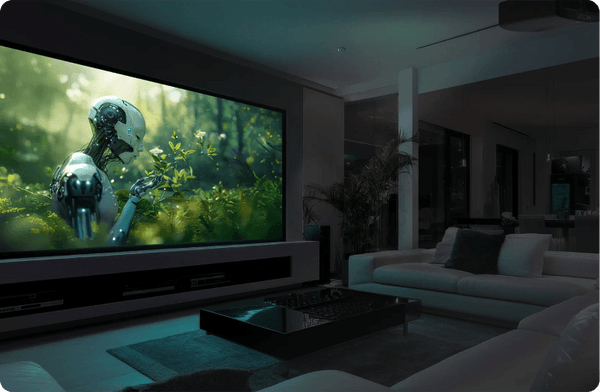
Ambient Light Rejecting (ALR) Projector Screens

View all Ambient Light Rejecting (ALR) Projector Screens

AMBIENT LIGHT REJECTING SCREENS

KEEP THE LIGHT.
CHOOSE THE
RIGHT SCREEN.

A brighter room needs more than a darker surface. Match your projector and the direction of your room’s light to an ALR material built for both.

Already know your material? Shop the full collection ↗

Featured ALR screen · Spectra ShadowScape ↗Lights-on comparison: Spectra ShadowScape on the left preserves more contrast while the conventional screen on the right appears washed out
ALR is not one universal surface.A UST screen and a standard-throw ALR screen manage light differently. Start with the projector.

MATCH YOUR PROJECTOR

CHOOSE YOUR ALR SCREEN TYPE.

Ambient Light Rejecting (ALR) Projector Screens

UNDERSTAND THE TRADEOFF

SAME GOAL. DIFFERENT OPTICS.

Choose for the light you have—and the seats you use.

ULTRA SHORT THROW

Lenticular UST material

Designed to direct steeply angled projector light from below toward the viewer while reducing light from above.

Check before buyingCorrect screen orientation and projector placement are essential. Side light still needs attention.

Explore UST ALR screens →
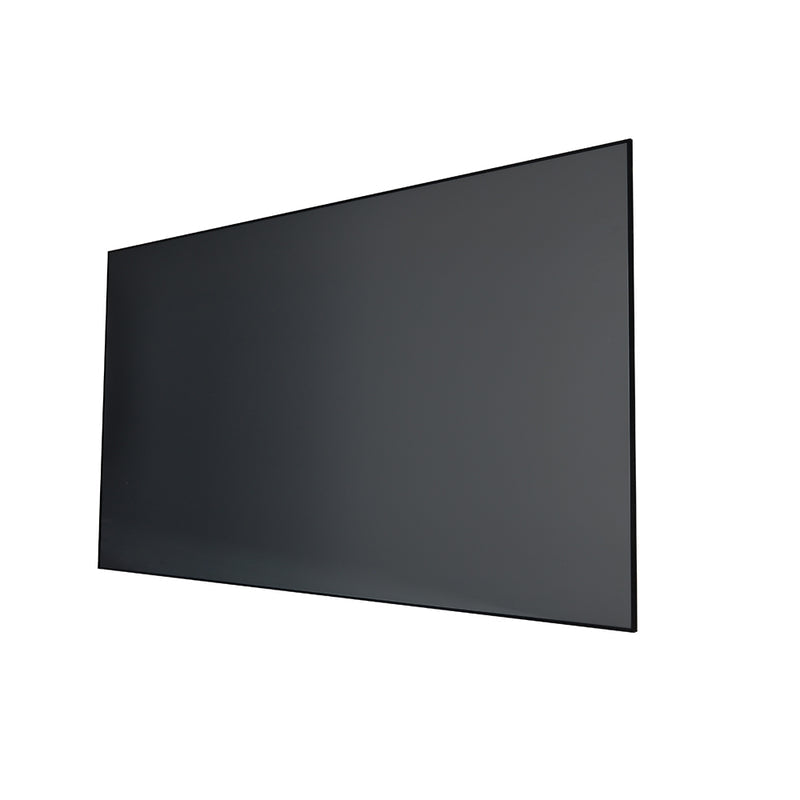
STANDARD THROW

Angular-reflective ALR

Uses projection and viewing geometry to favor the projected image over light arriving from other directions.

Check before buyingMinimum throw ratio and seating position matter. Higher gain can trade wider viewing for on-axis brightness.

Explore standard-throw ALR →

LIGHT-CONTROLLED ROOM

Consider matte white too

When you can control the light, a diffuse white screen may be the simpler starting point for a wide seating layout.

Check before buyingIt does not reject ambient light. Compare samples in your room before deciding that ALR is necessary.

Explore all screen materials →

Optical diagrams are simplified illustrations, not installation drawings. Material behavior varies by model.

SEE THE DIFFERENCE IN THE CATALOG

TWO WAYS TO BRING ALR HOME.

Spectra Projection Vantage fixed frame screen

SPECTRA PROJECTION · UST

Vantage 120″ UST ALR / CLR

120″ · 16:9 · Fixed frame · 0.5 gain

Lenticular surface for UST projection from below. A starting point for managing overhead room light.

Not a standard-throw screen.

View screen & current price ↗
Spectra Projection ShadowScape fixed frame screen

SPECTRA PROJECTION · STANDARD THROW

ShadowScape 120″ ALR

120″ · Fixed frame · Standard throw

An ambient-light-rejecting surface for standard-throw projection in rooms with light.

Pair with a standard-throw projector.

View screen & current price ↗

Find your size, format and mounting style.

Explore the complete ALR assortment with store filters, sorting and product comparison.

Shop all ALR screens ↗

LET’S CHECK THE WHOLE SETUP

BRING YOUR ROOM.
WE’LL BRING THE SCREEN KNOW-HOW.

Tell us your projector model, image size, seating layout and light sources.

Talk to a screen expert ↗
Compare All

Buying questions answered

Does an ALR screen work in any bright room?

No. An ambient light rejecting screen manages light arriving from particular directions; it cannot separate every unwanted light source from the projected image. Its benefit depends on the positions of the projector, screen, viewers, windows and lamps. Reduce direct light on the screen and choose material suited to the remaining light paths. Do not treat an ALR label as a daylight-performance guarantee.

Further reading: Supporting guide

Are ALR and CLR screens interchangeable?

Not automatically. ALR is a broad description of ambient-light-rejecting behavior. CLR identifies ceiling-light rejection in products using that terminology, but the label alone does not establish projector compatibility. Check the material’s optical design, supported throw type, orientation and viewing angles. A screen intended for light coming from a UST below the image may be unsuitable for a ceiling-mounted projector.

Further reading: Related collection and details

Should I choose an ALR screen or a brighter projector?

First identify the problem. Low image brightness and washed-out contrast are related but different issues. A brighter projector increases projected light; a suitable ALR material can reduce some competing room light reaching viewers. Often the most useful comparison includes shades or lamp placement as well. Make the decision using your actual image size, viewing positions and lighting rather than a single specification.

Further reading: Projector brightness guide

What tradeoffs should I check before ordering ALR material?

Evaluate the image from the center and outer seats, and check the manufacturer’s minimum throw requirements. Ask about viewing angle, brightness uniformity, visible texture and hotspotting with your projector. If samples or a demonstration are available, use the intended geometry and lighting. Two materials with similar advertised rejection percentages may behave differently in the room.

Further reading: Screen buying guide

What is an ALR projector screen?

ALR means ambient light rejecting. An ALR screen uses its material or optical structure to favor projected light while reducing some light arriving from other directions. It does not remove all ambient light, and it must match the projector’s position. Start by identifying whether your projector is UST or an across-room model, then check the exact material’s supported throw geometry, orientation and seating angles.

Further reading: Supporting guide

Does ALR improve black levels when sunlight falls directly on the image?

It can reduce the effect of light arriving from directions the material is designed to reject, but it cannot remove all light striking the surface. Direct sunlight or light arriving along a useful projection/viewing path can still wash out the picture. Shade the image area first and compare the material under your normal room conditions. Choose a screen and lighting plan together rather than treating an ALR percentage as a daylight guarantee.

Further reading: Screen buying guide

Why should I test an ALR sample from the side seats?

An optical surface directs light toward a particular viewing region. Outside that region, viewers may see lower brightness, color changes or unevenness. The same sample can look impressive from the central seat and behave differently across a wide sofa. Use the intended lens position and the actual light sources when testing, and check both bright uniform images and darker content from the seats that matter.

Further reading: Screen buying guide

Is a gray screen automatically an ALR screen?

No. Gray color and directional light rejection describe different properties. A gray surface can reflect less light without selectively rejecting the room’s troublesome light directions. An ALR surface adds an optical behavior that must match the projector and seating geometry. Check the material’s supported throw ratio and viewing cone in addition to its color and gain, and compare the result under the lighting you actually plan to use.

Further reading: Screen buying guide