Ultra Short Throw Projector Screens (UST)

View all Ultra Short Throw Projector Screens (UST)

Ultra short throw projector screens

UST SCREENS.
BIG PICTURE. RIGHT FIT.

Build your laser TV around a screen made for UST. Start with how it fits your room, then match the surface to your projector and light.

Fixed frame or floor rising. One considered choice.

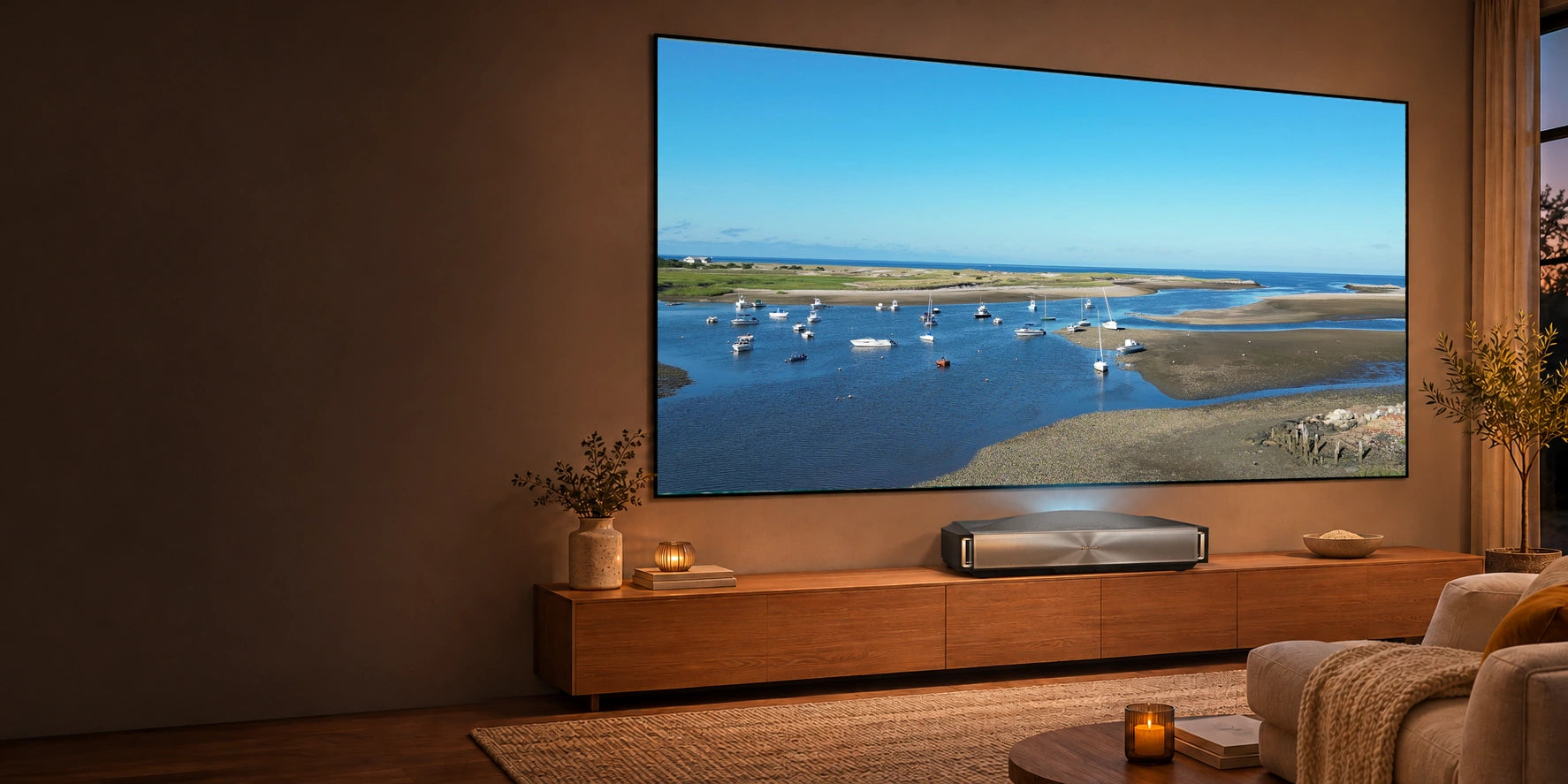
Ultra short throw projector below a screen showing a harbor

Start with your space

ON THE WALL. OR OUT OF SIGHT.

Two ways to make a big picture feel at home.

Spectra Vantage fixed-frame UST screen Fixed frame

A dedicated place for the picture

Keep your screen ready.

A permanent wall-mounted screen makes sense when your room has a dedicated viewing wall. Plan the frame dimensions and projector position together.

Check: wall width, mounting height and projector clearance.

Explore Spectra Vantage →
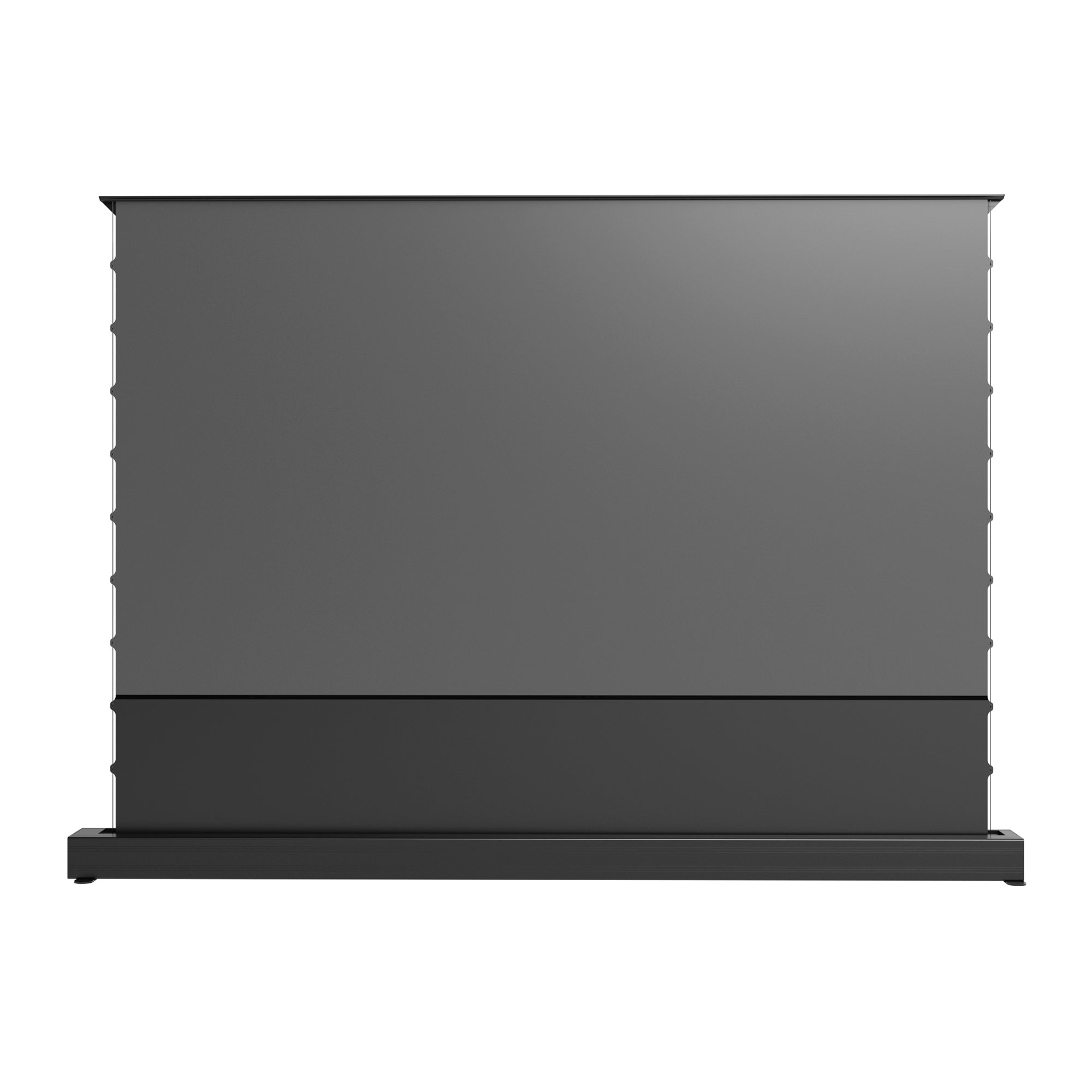
Spectra Phoenix motorized floor-rising UST screen Motorized floor rising

A room that changes with you

Bring the cinema up.

A screen that rises from its housing gives a shared room flexibility. Allow for the case, power connection and the screen’s full travel above your furniture.

Check: housing footprint, rise height and beam clearance.

Explore Spectra Phoenix →

Ultra Short Throw Projector Screens (UST)

The surface matters

UST + ALR.
CHECK BOTH.

“Ambient light rejecting” alone does not establish UST compatibility. Choose a surface designed to receive light from a projector close below the screen.

Browse UST-compatible screens →
01

Lights on?

Start with UST-specific ALR surfaces. Light rejection depends on its direction; manage windows and avoid direct light on the screen.

02

Mostly movie nights?

Room darkening still helps contrast. Compare surface, seating angles and projector output for your intended screen size.

03

Already own a projector?

Confirm the exact model, supported image sizes, throw geometry and installation orientation before ordering.

Better together

BUILD A MATCHED SYSTEM.

Explore UST projector-and-screen bundles with Vantage fixed-frame screens, floor-rising screens and other UST surfaces. Or build your own combination. Confirm screen height, cabinet depth and clearance for your room.

Compare All

Buying questions answered

Why does a UST projector need a carefully matched screen?

UST projection sends light toward the surface at a steep angle, making flatness and optical compatibility especially important. A screen intended for conventional projection may respond poorly to that light path, and wall texture or surface waves can become distracting. Choose a material explicitly compatible with your projector type and verify that the selected screen construction can maintain the required surface geometry.

Further reading: Related collection and details

Should I choose lenticular or Fresnel UST material?

Compare the particular materials against your light sources and seating. Lenticular and Fresnel designs manage light differently, and their gain, viewing cone and rejection behavior vary by product. Map overhead lights and side windows, then evaluate the outer seats as well as the center. Avoid choosing from a generic claim that one design rejects all room light or is always better.

Further reading: Screen buying guide

Are all UST screens low gain or fixed frame?

No. UST compatibility is not a universal gain value or mounting style. For example, the current Spectra collection includes Helios Fresnel products listed at 1.35 gain and Phoenix motorized floor-rising screens. Compare the exact material and mechanism you intend to buy. Do not infer compatibility, brightness or seating coverage from “UST” in a category name alone.

Further reading: Related collection and details

How should I choose between fixed-frame and floor-rising UST screens?

Choose fixed frame if the wall can remain dedicated to the image. Consider floor rising when the screen needs to disappear, but plan the case position and full travel path together with the projector and furniture. In either case, match the image size to the projector’s placement chart. A screen that fits the wall may still put the projected image at an unsuitable height.

Further reading: Screen buying guide

How do I choose the best ALR screen for my UST projector?

Confirm that the material explicitly supports your projector’s UST placement, then compare it under the light directions and seating angles in your room. Check image size, surface flatness and brightness uniformity before choosing fixed frame or floor rising. A screen that looks strong from the center seat may behave differently from a side seat. Ask for a relevant demonstration or sample rather than ranking materials by an advertised rejection percentage alone.

Further reading: Supporting guide · Screen buying guide

Why does the top and bottom orientation of a UST ALR surface matter?

A directional UST surface is designed to accept light arriving from the projector’s specified position and redirect it toward the audience. Installing it upside down or pairing it with an unsupported ceiling position can send useful projector light away from viewers. Follow the exact screen’s orientation markings and instructions. Rotate or invert it only if the manufacturer explicitly supports that arrangement; a physically symmetrical frame does not make the optical surface symmetrical.

Further reading: Screen buying guide

Why can a small wave in a UST screen become obvious?

UST light reaches the material from close to the screen at a steep angle. A change in surface shape changes where that light lands, making ripples or image distortion easier to see. Check wall flatness, frame assembly and the screen’s tensioning system before relying on digital correction. For retractable screens, verify that the particular surface and mechanism are intended for UST rather than choosing any motorized white screen.

Further reading: Screen buying guide

How should I evaluate a UST screen sample?

Use the intended projector position and place the sample in its specified orientation. Compare it with the lights you normally use, including side windows and overhead fixtures, and view it from central and outside seats. Look at dark scenes, bright uniform fields and fine text. A brighter sample in one central seat may have different off-axis behavior, so judge the full seating area rather than a single photograph.

Further reading: Screen buying guide